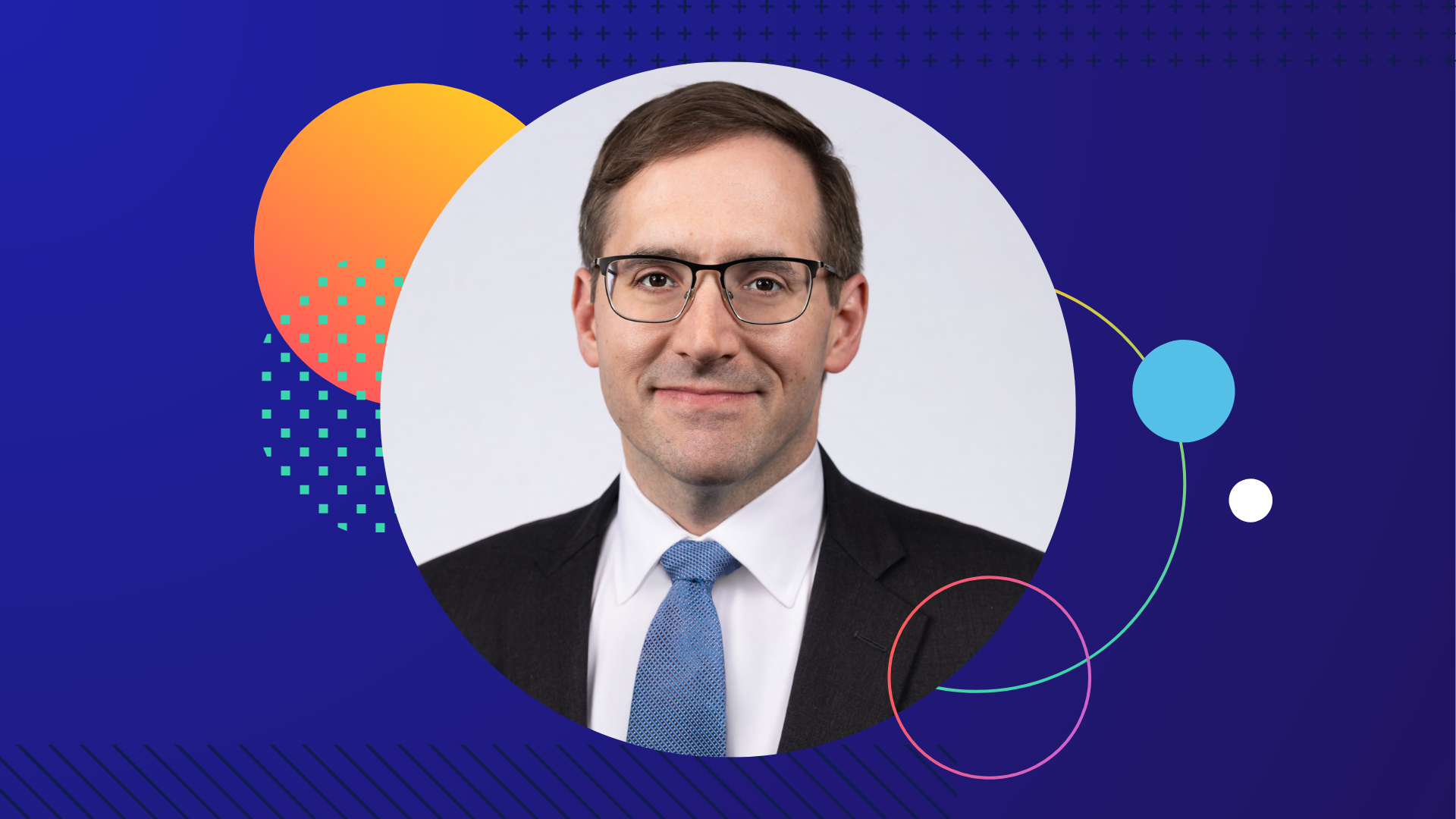
HIMSS Physician Committee Member Spotlight: Jake O’Shea, MD, MBA, FACEP
By: Gwynne Jelbaoui, FHIMSS
Dr. Jake O’Shea is a physician executive and informatics leader with extensive experience in clinical operations, health information technology, and system-level quality improvement. He serves as Chief Health Information Officer for HCA Healthcare, a role he assumed in 2023, where he leads enterprise clinical informatics strategy for HCA Healthcare’s more than 180 hospitals and serves as Executive Sponsor for the Expanse electronic health record program.
Dr. O’Shea has served in leadership roles at a variety of professional, nonprofit, and government organizations related to care delivery. He is a Fellow of the American College of Emergency Physicians, a past president of the Virginia College of Emergency Physicians, and has previously served as Chair of the Virginia Emergency Department Care Coordination Advisory Council and as a member of the Virginia Governor’s EMS Advisory Board. His areas of interest include building systems that support clinicians, strengthening teams, and improving outcomes for patients and communities.
I look forward to working with Dr. O’Shea as he serves on the HIMSS Physician Committee through the remainder of the year and in 2027. Below are his thoughts on digital tools and the impact they have/can have on care team members.
Learn more about the HIMSS Physician Committee here.
HIMSS: From your perspective, what does successful digital transformation look like in a clinical setting, and how should physicians define “measurable impact”?
Dr. O’Shea: In the clinical setting, digital transformation should focus on empowering and enabling our care teams to spend more time on making decisions and directly caring for patients, spend less time on administrative burden, and improve the quality and consistency of care delivery. Measurable impact should include not only adoption or go-live success, but whether the technology improves outcomes, reduces friction, strengthens safety, and creates a better experience for patients and care teams.
HIMSS: What guardrails are most important when implementing AI in patient care to ensure it is safe, ethical, and equitable?
Dr. O’Shea: A critical guardrail is ensuring AI is designed to augment clinical judgment - not replace it – and that a human is always in the loop. Another critical need is education for all care team members on what AI can do well and where it has limitations before they utilize AI tools for care delivery.
HIMSS: Where do you see the greatest opportunity for digital tools to reduce clinician burden while strengthening health system performance?
Dr. O’Shea: The greatest opportunity is reducing the friction that pulls clinicians away from patients, including documentation burden, fragmented information, inefficient handoffs, and manual administrative work. When digital tools make the right information easier to find and act on, they can improve our care team members’ experience while also supporting safer and more efficient care.
HIMSS: How should health systems evaluate ROI in digital health initiatives beyond financial metrics alone?
Dr. O’Shea: Non-financial ROI for a digital health initiative can be measured in a number of ways, including whether it improves quality, safety, access, clinician efficiency, and patient experience. Financial return does have impact, but in healthcare we also have to ask whether the investment helps our care teams deliver better, more consistent, and more patient-centered care.
HIMSS: What capabilities or competencies will physicians need to lead in an increasingly AI-enabled healthcare environment?
Dr. O’Shea: Physicians will need to understand what AI can and cannot do, along with the basics of how data supports AI tools and responsible AI governance. As AI becomes more common in healthcare, clinicians who learn to use it effectively will likely have an advantage over those who do not. That is why physicians should become familiar with these tools where appropriate, so they can use AI more thoughtfully in care delivery and explain to patients and family members how it is being used in their care.
-
Join Us as We Reimagine Health Through Information and Technology
At HIMSS, our vision is to realize the full health potential of every human, everywhere. Be part of the community that’s transforming the global health ecosystem with courage, curiosity and determination.